Behind every story is
a life that cannot be
summed up in a headline
ANASTASIA EFREMOVA
ECONOMICS & PUBLIC POLICY JOURNALIST
Exploring the intersection of
economics and public policy
through journalism
BEYOND THE BYLINE
Projects & Activities
Explore four areas that have shaped how I investigate questions, lead people, and turn ideas into practical work.
JOURNALISM, EDITORIAL & MEDIA
7 Roles
Reporting, editing, research, fact-checking, and publishing
ECONOMICS & PUBLIC POLICY RESEARCH
1 Independent Research Project
Economic behavior, public policy, research ethics, and responsible research design
LEADERSHIP & MENTORING
6 Roles
Team-building, mentoring, communication, public speaking, and community leadership
ENTREPRENEURSHIP & FINANCIAL EDUCATION
5 Ventures & Financial-Education Initiatives
Programs, curriculum, investing, financial education, and venture-building
Journalism, Editorial & Media
SELECTED EXPERIENCE
Journalism taught me to look beyond the first explanation—to ask better questions, test claims against evidence, and understand the people and systems behind a story. Across student, professional, bilingual, and independent reporting, I have learned to move from research and interviewing to editing, fact-checking, and publication while adapting to very different audiences.
JOURNALISM & EDITORIAL WORK IN NUMBERS
7
Editorial & Media Roles
40+
Published Stories
50+
Interviews Conducted
16
Published Books Edited
3,000+
Pages Edited
The Oracle: School Newspaper
Co-Editor-in-Chief
Troy High School · Fullerton, California, USA
The Oracle Advisor: Erika Nickel
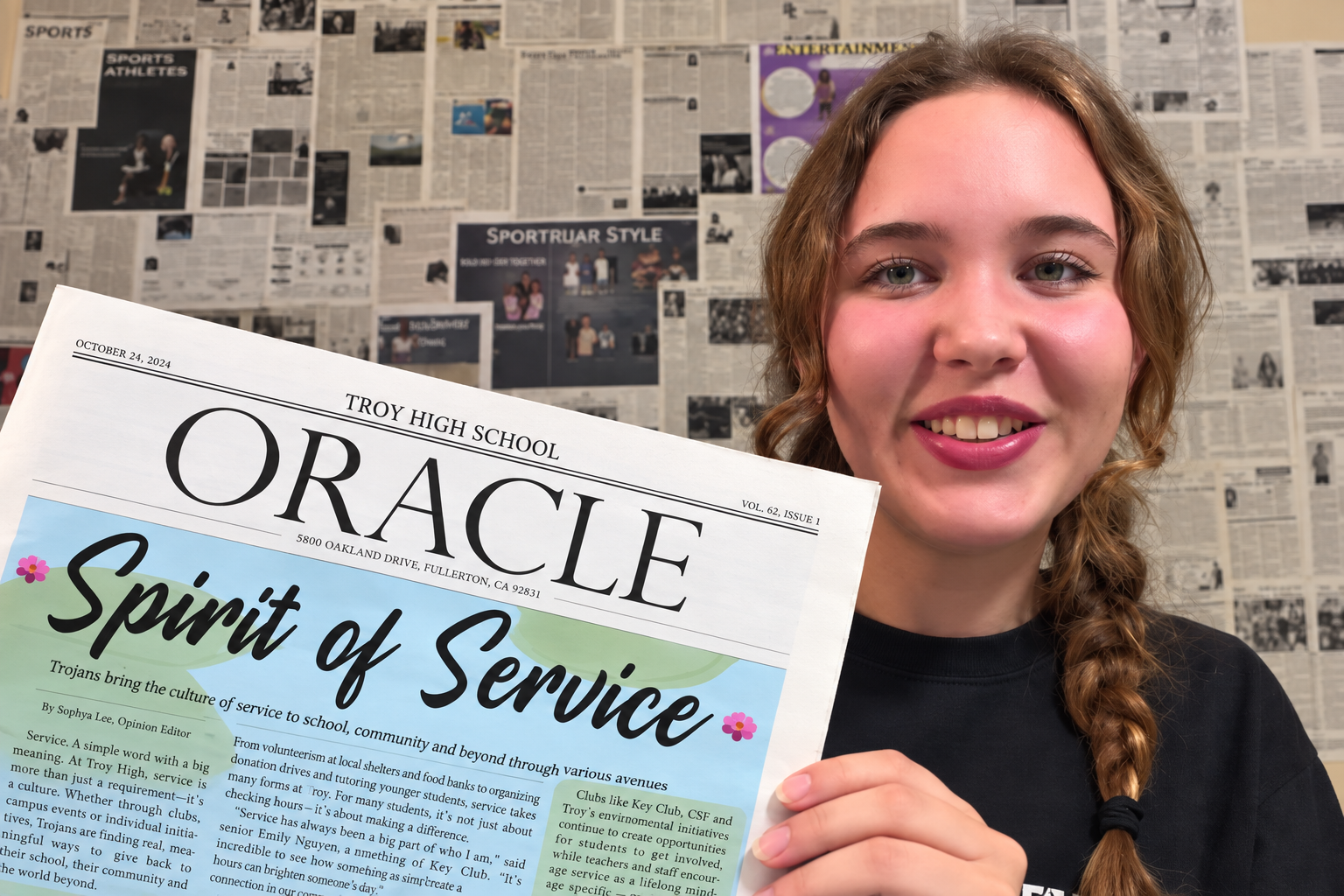
The Oracle is Troy High School’s official, award-winning student newspaper. Established around 1965, shortly after Troy opened, it is now entering its 62nd year of publication. Produced by a 44-member student newsroom, The Oracle covers campus news, public policy, culture, opinion, and student life. The long-running print publication is now expanding into digital journalism through its first website and has been recognized by the Orange County Journalism Education Association as one of the county’s top student print publications.
My Path at The Oracle
I joined The Oracle as a reporter, became News Editor, and now serve as Co-Editor-in-Chief. With each role, my focus expanded—from writing my own stories to editing others’ work and helping lead our student newsroom. Today, I train new writers, coordinate production, and help our team turn ideas into stories ready for publication.
THE ORACLE IN NUMBERS
Top 2
OCJEA print publication recognition
1st
Business Team
+25%
Readership
31 → 44
Newsroom staff
20 → 30
Applicants
12 → 20
Pages in selected issues
20-40
Articles per issue
NEWSROOM INNOVATIONS
Built
a new website
Introduced
a beat system
Added
new sections
Developed
a training system
Created
a newsroom handbook
Restructured
editorial leadership
Building a Stronger Newsroom
I organized training for new writers and created a student-journalist handbook covering reporting ethics, AP style, and our editorial workflow. I also established a business team, adding a dedicated group to support the newspaper’s business operations.
Over the summer, I coordinated production so our newspaper was printed and ready to distribute on the first day of school. That work meant planning ahead, communicating responsibilities, and helping the team keep moving toward a shared deadline.
Our team expanded selected issues of The Oracle from the usual 12 pages to 20, making room for more stories and student voices.
What I Learned
Editing taught me to look beyond my own approach and help another writer make a story clearer while preserving their voice. Co-leading the newsroom strengthened my ability to set priorities, delegate, and give useful feedback. It also taught me that leadership depends on preparation and follow-through as much as ideas.
Explore My The Oracle Articles
Bilingual Journalism & Editing
Russian–English Editor, Proofreader & Political Fact-Checker
Freelance · USA & International
BILINGUAL EDITING IN NUMBERS
4
Countries
12
Authors
16
Published Books
3,000+
Pages Edited
Editing Across Languages
I have worked with authors and clients from the United Kingdom, Germany, the United Arab Emirates, and the United States, often communicating with them in Russian while reviewing books, manuscripts, and other written materials for English-speaking audiences.
My role begins after translation. I review English translations prepared by non-native English speakers against the original Russian text, proofreading and copy editing for accuracy, consistency, clarity, and natural English. I look for places where a translation may be grammatically correct but still sound unnatural to an American reader—or where the original meaning, tone, or context has shifted between languages.
Some of the most challenging passages involve humor, metaphors, idioms, expressions, folklore, and cultural references. These cannot always be carried word-for-word from Russian into English. A joke can lose its humor, an idiom can become confusing, or a culturally specific reference can lose the context that gives it meaning. I identify those gaps and refine the English while preserving the author’s voice, tone, intent, humor, and cultural meaning.
Political & Historical Fact-Checking
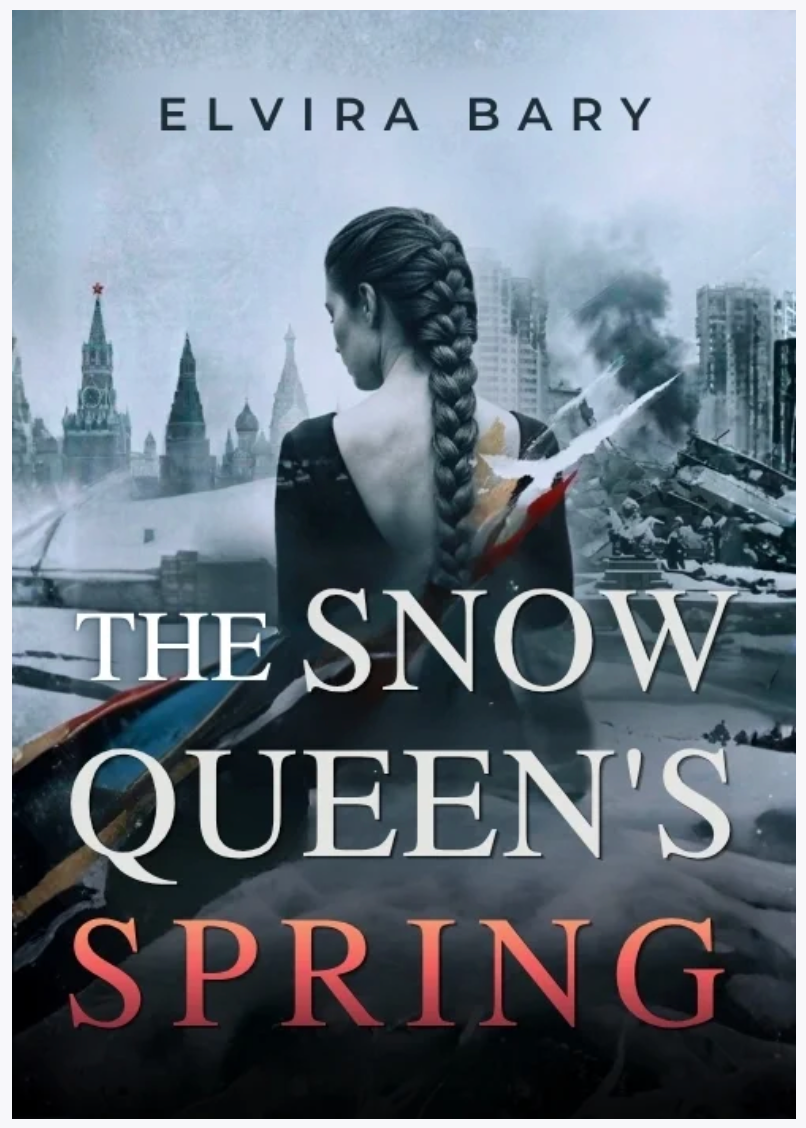
Some of the books I have worked on combine fiction with contemporary politics, history, and geopolitics. One example is Elvira Bary’s The Snow Queen’s Spring, a geopolitical thriller.
For projects like this, my role extends beyond language editing. I check political and historical references, names, dates, quotations, events, and cultural context, comparing details with supporting sources and flagging inconsistencies that could change how a passage is understood.
This means reading on two levels at once: asking whether the English sounds natural to an American reader, and whether the facts, context, and meaning behind the language remain accurate.
What I Learned
Reviewing more than 3,000 pages sharpened my attention to detail and taught me how easily meaning can disappear between languages. I learned to notice the small things—a phrase that sounds slightly unnatural, a metaphor that no longer works, a historical detail that does not align, or a cultural reference that an American reader may interpret differently.
Most importantly, I learned that strong bilingual editing is not simply about correcting English. It is about preserving what the author meant while making that meaning clear to someone from another language and culture—ensuring that the meaning survives the journey between languages and cultures.
Orange County Business Journal
Editorial Intern & Business Reporter
Orange County, California, USA
Editorial Mentor: Nancy Luna, Executive Editor
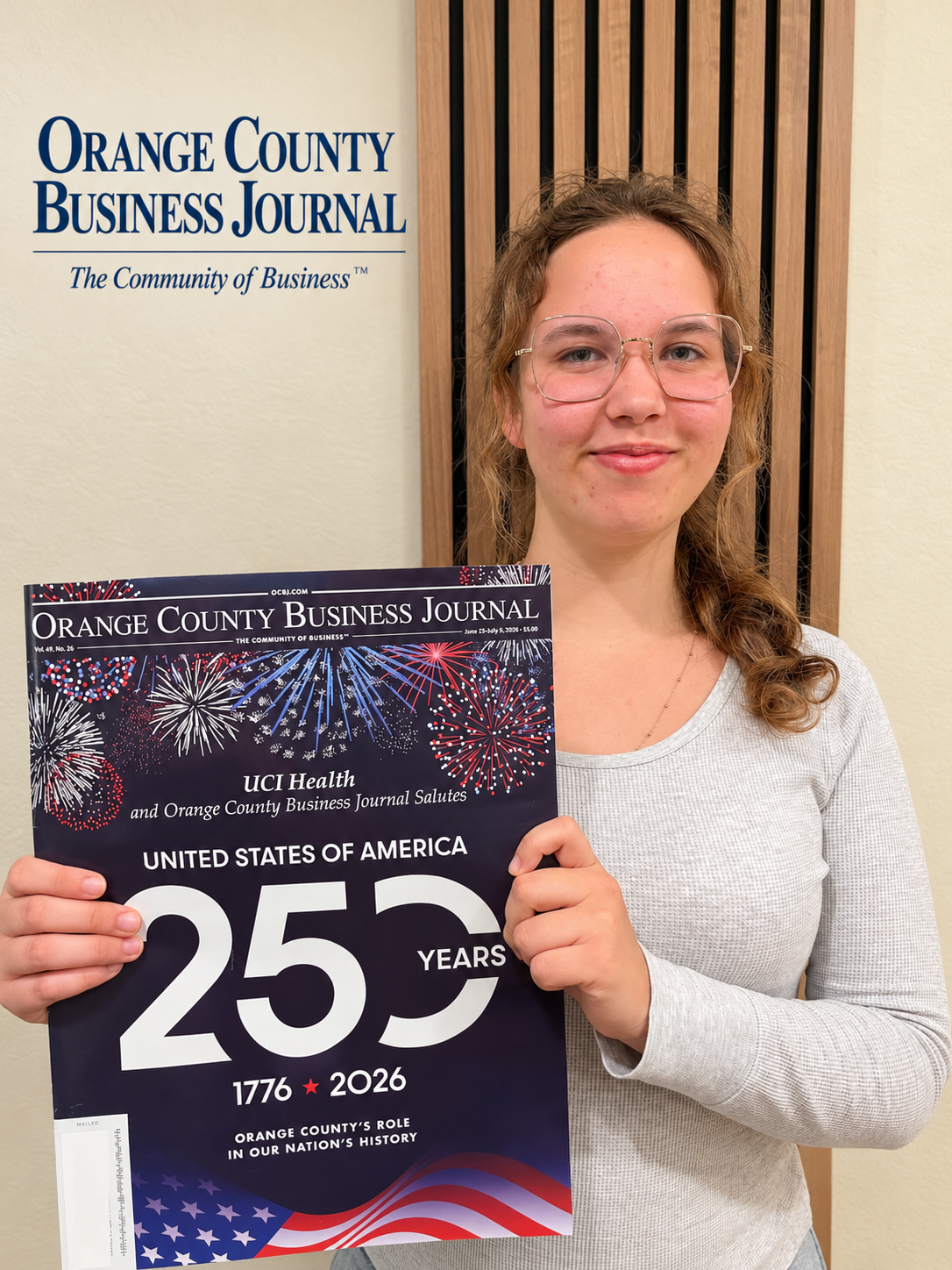
The Orange County Business Journal is a leading weekly publication covering Orange County’s companies, industries, executives, investors, and economic developments. With more than 15,000 subscribers and a weekly reach exceeding 61,000, it serves a professional audience that includes business owners, C-suite executives, investors, and regional decision-makers.
Making It Happen
The first answer was no.
My school required a 150-hour internship, but I wanted more than an available placement. I wanted to work at the Orange County Business Journal because its reporting on companies, markets, and the Orange County economy connected directly with the economic research I was already pursuing.
OCBJ had never established a high-school editorial internship. Creating one required formal approval, onboarding, and months of internal coordination. Instead of treating the initial rejection as final, I asked what would be required, shared my reporting portfolio, attended an editorial staff meeting, and continued the conversation with the newspaper’s editors.
Eventually, OCBJ completed the approval process and created the position. I became its first high-school editorial intern, with the official role of Editorial Intern and Business Reporter.
The original requirement was 150 hours. I stayed for approximately ten weeks, worked 24–40 hours per week, and completed more than 280 hours through the end of the summer.
OCBJ IN NUMBERS
1st
High School Intern
36
Published articles
20
Original pitches
280
Internship hours
From Pitch to Publication
At OCBJ, I participated in the full professional reporting process rather than completing observational intern assignments.
I monitored press releases, earnings reports, company announcements, executive changes, contracts, acquisitions, and other business developments. I learned to evaluate whether an announcement was genuinely newsworthy and to identify the Orange County significance behind national financial or industry information.
For each story, I researched the company and its industry, examined revenue figures, earnings results, analyst expectations, market capitalization, stock movements, leadership changes, and relevant historical context. I developed original angles, prepared interview questions, contacted sources, and interviewed CEOs, company founders, business owners, and other executives.
After each interview, I reviewed my notes, followed up when information was incomplete, verified names, titles, dates, figures, quotations, and company data, and turned the reporting into a concise business article. I wrote under professional deadlines and responded to editorial feedback, fact checks, rewrites, and corrections.
By the end of the internship, I had published 36 articles. More than 20 began as my own story ideas and pitches and were approved by OCBJ editors.
CONTRIBUTED RESEARCH SCOPE
40
Wealthiest Orange County individuals
250
Businesses and companies researched
500
Influential business leaders
Researching Orange County at Scale
Some assignments focused on a single company or executive. Others required understanding Orange County’s business community at a much larger scale.
In addition to daily reporting, I contributed research involving:
- Orange County’s 40 wealthiest individuals;
- approximately 250 businesses and companies;
- and the OC500, covering 500 influential business and community leaders.
This work required moving between individual records and the broader regional economy—checking company information, executive roles, financial figures, ownership, leadership changes, and other details across hundreds of people and organizations.
It showed me that business journalism is not only about reporting isolated announcements. It is also about building an accurate map of the companies, industries, investors, and leaders shaping a region.
What I Learned
Professional business reporting changed the way I read an announcement.
I learned to distinguish what a company says from what independent reporting and verifiable evidence can support. I learned to turn earnings results and market data into context, prepare more focused interview questions, speak with executives without losing journalistic skepticism, and explain why a business development matters beyond the announcement itself.
The internship also strengthened my news judgment. A press release might contain dozens of facts, but the reporter must decide which development is new, which number is meaningful, what remains unanswered, and why a professional reader should care.
Most importantly, the experience connected two lessons. The first was how to report a story accurately. The second was how to create an opportunity that did not previously exist: understand the requirements, build trust, demonstrate readiness, and continue the conversation until an initial “no” becomes a path forward.
Interviews also taught me that behind every business story is a person whose experience cannot be reduced to a headline, a number, or a company name. I began to see reporting not only as explaining what happened, but as understanding the years of work, risk, sacrifice, and memory behind it.
Voice of OC
Public Policy Reporter
Orange County, California, USA
Making Policy Personal
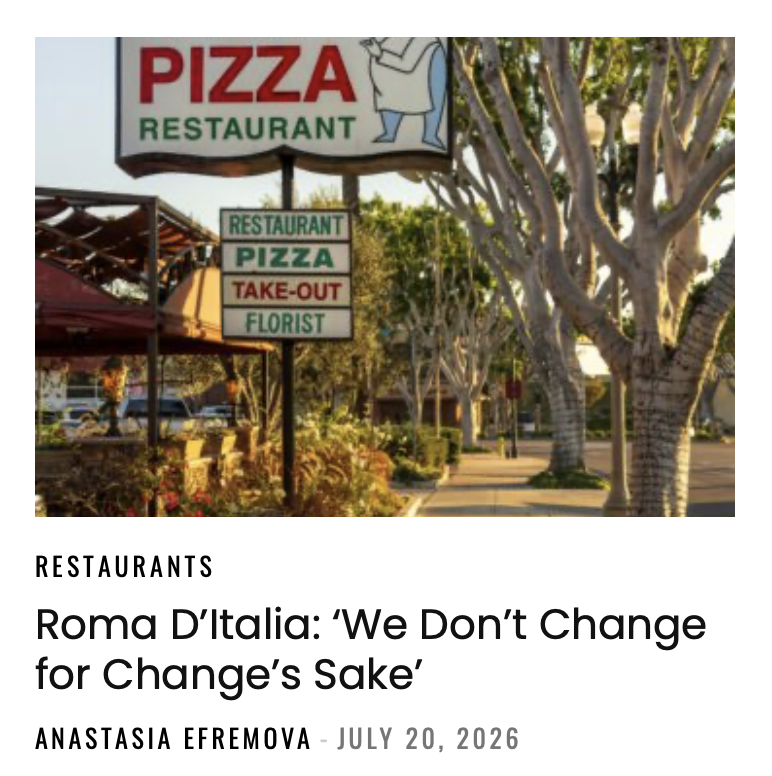
At Voice of OC, I report on public decisions that shape everyday life in Orange County. For my story on school phone restrictions, I compared how districts were responding to California’s new law, examining differences in their rules, enforcement, and exceptions. The reporting brought together questions about classroom learning, student well-being, and parents’ concerns about reaching their children during emergencies.
I also co-authored a story with Angelina Hicks about Fullerton’s proposed e-bike regulations. We covered the City Council’s initial vote, residents’ safety concerns, and the proposed rules for streets, sidewalks, and trails. Reporting on an evolving policy meant explaining both what officials had decided and what still needed approval.
These assignments have helped me become more precise about how government decisions turn into rules people actually live with. I’m learning to compare policies, explain competing concerns, and make the details understandable without losing their significance. The questions that keep me interested are often the most practical: What will change? Who will be affected? And what does a reader need to know?
Selected Reporting
- Orange County Schools Limit Student Phone Access Under State LawRead Article →
- Another Orange County City Cracks Down on Reckless E-bike RidersRead Article →
Voices of Tomorrow
Student Journalist
Howard University Multicultural Media Academy · Washington, D.C., USA


Listening Across Languages
At Howard University’s Multicultural Media Academy, I reported for Voices of Tomorrow on the mental-health effects of immigration enforcement on children. I interviewed Russian-speaking parents and teenagers in Russian and wrote their stories in English. Working across languages meant paying close attention to how people described their experiences and how to carry that meaning into a story for a different audience.
I also wrote about Marine veteran Larry Sutton’s transition to civilian life, exploring his reflections on military service, family, and the challenges of adjusting afterward. These stories gave me opportunities to listen to people whose lives were very different from my own. They reinforced the kind of journalist I want to become: someone who makes room for the person’s experience, even when it complicates the story I expected to tell.
The immigration reporting also opened a new line of inquiry. If fear and uncertainty could affect a child’s well-being, how might they influence a family’s decisions about work, spending, or the future? Those questions became the starting point for The Chilling Effect, my independent project exploring the relationship between immigration enforcement and economic behavior in Orange County.
Selected Reporting
- Deportation Impacts Mental Health of Immigrant ChildrenRead Article →
- Reflections from a Marine: Larry Sutton’s Transition to Civilian LifeRead Article →
Independent Reporting
Writer & Publisher
Orange County, California, USA
Building a Team, Learning to Lead
I founded a youth journalism platform and brought together a team of more than 20 students to create a space for young people to report on their communities. Alongside organizing the project, I wrote about local events, student initiatives, volunteer opportunities, and community responses to the Los Angeles fires. I wanted to build a publication that other young writers would feel invested in, too.
The project did not become the sustained publication I had envisioned. Many students had other priorities, and their initial interest did not translate into a regular commitment to writing. That was disappointing, but it taught me something I had underestimated: assembling a team and building shared commitment are different tasks. My enthusiasm for the idea could not replace each person’s own reason to participate.
In later projects, I began having more direct conversations about motivation before making plans together. Why does this project matter to you? What can you realistically commit to? What would you like to contribute, and what do you hope to gain? I now spend more time understanding those answers and discussing expectations. That experience changed how I lead: I pay closer attention to the people choosing to join a project and what will make the work meaningful to them.
Selected Reporting
- Hope, Healing and Hairlines hosts a Walk for Alopecia in Mission ViejoRead Article →
- Troy High School NJROTC Program holds Annual Military InspectionRead Article →
- L.A. Fires victims struggle with insurance and criticism but gain support from the communityRead Article →

Elvira Bary Political Media
Bilingual Researcher, Editor & Fact-Checker
Irvine, California, USA
About the Platform
Elvira Bary is a Russian-American author and media creator whose work explores Russian politics, history, and culture through video essays and written commentary. Her YouTube channel, launched in 2025, grew past 100,000 subscribers within its first year; by September 2026, its audience had grown to roughly 135k+ subscribers. Her website also publishes full-text versions of video essays and organizes work across topics including foreign policy, history, society, religion, and the Russo-Ukrainian war.
Research & Fact-Checking
My work began before a video or article reached the audience. I researched political and historical background, reviewed source material, checked factual claims, and verified details such as names, dates, quotations, events, and historical context.
The most important question was not simply whether I could find a source, but whether that source actually supported the statement being made. I learned to flag claims that were too broad, identify missing context, compare competing accounts, and help adjust wording when the available evidence was more limited or nuanced than the original phrasing suggested.
Because I can work in both Russian and English, I was also able to consult Russian-language materials directly rather than relying only on English summaries or translations.
Editing for a Public Audience
I edited video scripts, newsletters, blog posts, stories, and YouTube descriptions, focusing on accuracy, organization, clarity, tone, and consistency. I helped make complex political and historical material understandable to an English-speaking audience without simplifying away important context.
Working between Russian and English also meant paying attention to meaning, not just vocabulary. Political terminology, historical references, and culturally specific ideas do not always carry cleanly from one language into another. I compared wording across languages and helped preserve nuance while making the English sound natural.
From Research to Publication
My responsibilities extended beyond research and editing into the mechanics of digital publishing. I worked with website content and WordPress, prepared and scheduled posts, edited newsletters and video descriptions, and supported visual and video elements, including transitions.
That gave me a view of the entire publishing process. A piece of content could move from research notes to a script, through fact-checking and editing, into video and supporting text, and finally onto the website, YouTube, or newsletter. At each stage, small decisions about wording, sourcing, organization, and presentation could affect how clearly the audience understood the final story.
What I Learned
Working behind a public-facing media platform taught me that credibility is built through dozens of decisions the audience may never see. I learned to verify before accepting, distinguish evidence from assertion, notice missing context, and question language that sounded more certain than the underlying sources allowed.
I also learned what kind of role I naturally take in a media project. I was not the public voice of the channel; I worked behind it—researching information, testing claims, editing language, catching inconsistencies, and helping move material from an idea to publication. The experience strengthened my attention to detail, editorial judgment, bilingual research skills, and understanding of how responsible media is produced for a large audience.